Almost nobody in this industry publishes their rates, which means every B2B buyer starts the conversation with no idea whether NZ$2,000 a month is a bargain or a stitch-up. So here are the actual bands in the New Zealand market, what each one buys, and the questions that flush out a bad quote before you sign anything.
What B2B SEO actually costs in New Zealand
These are the bands I see quoted, both from my own work and from the quotes prospects forward me when they are comparing options. Prices are NZD and exclude GST, which is the convention for B2B services here.
- Under NZ$1,000/month. Offshore content mills, "SEO packages" bundled into a web host, or a junior freelancer learning on your site.
- NZ$1,400–$2,500/month. Independent specialists. Usually 2–4 substantial articles a month plus technical foundations.
- NZ$2,500–$4,500/month. Senior specialists and small studios. Content plus strategy, sales enablement, and ongoing technical work.
- NZ$5,000–$12,000/month. Full-service agencies. Account manager, strategist, writers, sometimes a developer.
- NZ$12,000+/month. Enterprise retainers, multi-market work, or agencies with a well-known name attached.
One-off project pricing runs alongside all of that: a technical SEO audit at NZ$900–$3,000, a content strategy at NZ$2,000–$6,000, and implementation quoted to scope.
What each price band actually buys
Under NZ$1,000/month
At this price the only way the economics work is outsourced bulk content with no research behind it. You get word count. You do not get topical authority, technical fixes, or anyone who has looked at what is currently ranking and why. This is the band that produces the 40-post blog that has never ranked for anything, which is a problem I have written about at length.
The hidden cost is remedial. Thin content published under your domain does not sit there harmlessly. It has to be pruned, consolidated or rewritten before real work can start.
NZ$1,400–$2,500/month
The entry point for work that is actually researched. Expect 2–4 long-form pieces a month, a technical audit at kickoff, schema markup on everything published, and a monthly check-in. You are usually dealing directly with the person writing and implementing.
What you do not get at this band: heavy implementation work, sales collateral, or someone managing your CMS. Articles are typically delivered as files for your team to publish.
NZ$2,500–$4,500/month
Content plus the things that make content convert. More output, but the meaningful difference is scope: sales one-pagers built from what prospects actually ask, ongoing technical work rather than a one-off audit, and strategy that connects the content to pipeline instead of to a traffic chart.
This is the band where AEO should be included rather than sold as an extra. If it is quoted separately, ask why.
NZ$5,000–$12,000/month
You are buying capacity and coordination. A team can run multiple workstreams at once, cover holidays, and handle a large multi-market site. That is genuinely valuable if you have that scale.
You are also paying for the account management layer, the office, and the junior-writer markup. On a NZ$8,000 retainer, a meaningful share never touches your site. That is not a scandal, it is how agencies work - but you should know you are buying it. I have laid out the honest version of that trade-off in specialist vs agency.
Why agencies won't publish a number
There is one legitimate reason and two commercial ones.
The legitimate reason: scope genuinely varies. A 40-page site and a 4,000-page site are different jobs, and a single published number could mislead either one.
The commercial reasons are more common. Value-based pricing means the provider wants to understand your budget and the size of the problem before quoting, because the same work can be priced very differently depending on what it is worth to you. And a discovery call is a sales opportunity - if you have a number before you talk, you can compare providers without ever speaking to them.
None of that makes an agency dishonest. But if a provider will not give you a starting number before a call, that is pricing information in itself.
What should be included at any price
Above about NZ$1,400 a month, these should all be in scope. If any are missing, that is a question, not a dealbreaker.
- A technical audit at kickoff. Not a scorecard. A prioritised fix list a developer could act on.
- Keyword and competitor research before anything is written. What ranks now, why, and where the gap is.
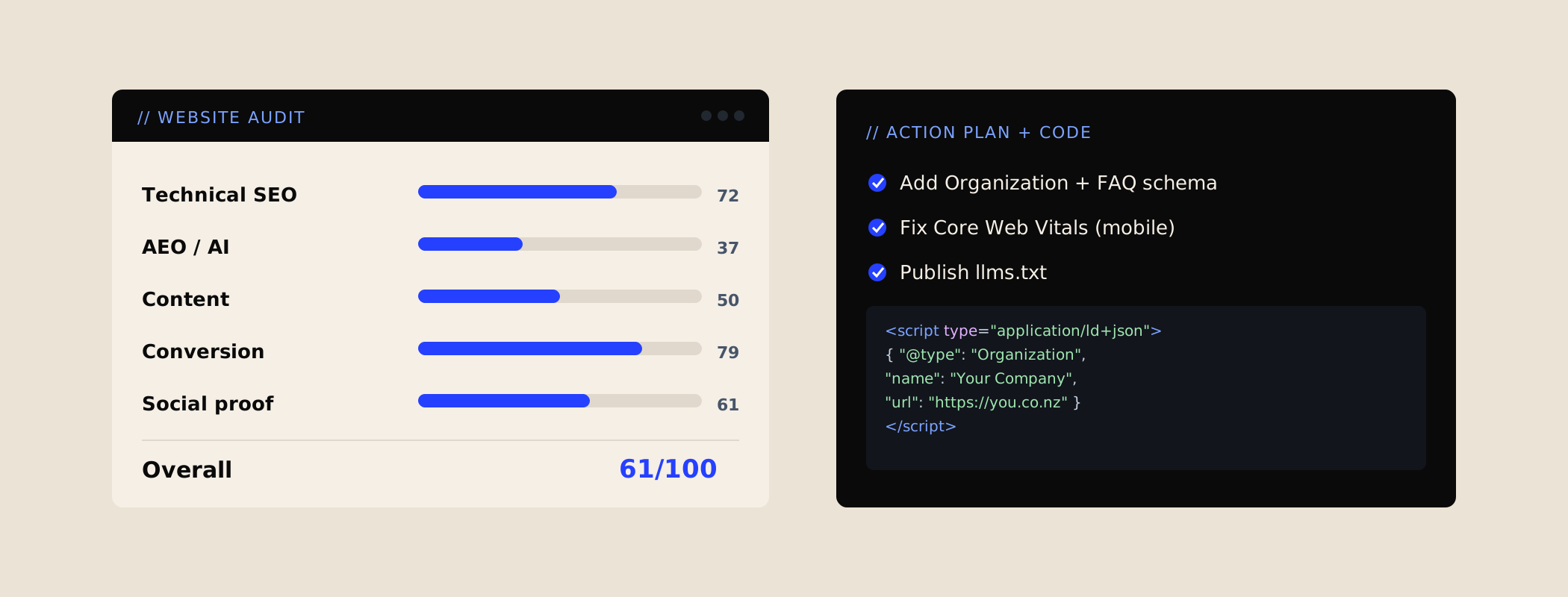
- Structured data on everything published. Article and FAQPage schema at minimum. This is what AI engines actually read.
- Internal linking as a deliverable, not an afterthought. New content connected to what already exists.
- AEO baked in. llms.txt, heading structure tuned for AI parsing, citable passages. Not a separate invoice.
- Reporting you can read. What moved, what did not, what happens next. In English.
- You own the work. Content, schema and documentation stay yours if the engagement ends.
Six questions that expose a bad quote
- "Can you show me your own numbers?" Anyone selling SEO should be able to show their own domain's performance, with dates. If they cannot rank themselves, that is the answer.
- "What happens in month one, specifically?" A good answer is a list of deliverables. A bad answer is the word "strategy" repeated.
- "Who actually does the work?" Ask for the name and whether you will ever speak to them. In agencies the person who sold you is rarely the person writing.
- "Is AEO included or extra?" If it is a separate line item, they are charging twice for one job.
- "What do I own if we stop?" Content, schema, documentation and access should all be yours. If the answer is vague, get it in writing.
- "What would make you tell me not to do this?" Anyone who cannot name a scenario where their service is the wrong call is selling, not advising.
What I charge, and why it's on the website
Entry is NZ$1,400 a month, Content & Enablement is NZ$2,500, and Growth is NZ$4,000. Project work starts at NZ$750 for a one-pager and NZ$900 for a standalone technical audit. Prepay six or twelve months and it is 10% off. All of it is on the pricing page of this site, which is where it has been since the site went up.
The reason is not transparency as a virtue signal. It is that published pricing does two useful things. It filters out the conversations that were never going to work, which saves both of us a call. And it means when someone asks an AI engine what B2B SEO costs in New Zealand, there is a real number on a real page for it to cite. Which is, roughly, the entire thing I do for a living.
Working out your own number. Take your average contract value, divide the annual retainer by it, and ask whether that many extra deals a year is plausible. If it is not, the answer is no regardless of who is quoting. If it is, the next question is which band, and a website audit will tell you that faster than a round of sales calls.
Before you brief anyone, run your own homepage through the Waffle-o-Meter. If it comes back full of buzzwords and unbacked claims, that is a content problem no retainer fixes for you - and it is worth knowing before you pay for one.