If you've ever requested a "free website audit," you know the drill. You hand over your URL, a tool crawls your site, and back comes a PDF with a big red number and a lot of amber warning triangles. It looks thorough. It feels alarming. And it's almost entirely useless - because it tells you that something's wrong without telling you what to do about it. That's not an audit. It's a sales pitch wearing an audit's clothes. So let's be clear about what a real one actually contains.
A score is not an audit
Automated tools are fine at what they do: they crawl a site, check it against a rulebook, and produce a number. The problem is that the number is the output, when it should be the starting point. Knowing your site scores 54/100 changes nothing. Knowing that your Core Web Vitals are failing on mobile because of an un-lazy-loaded hero image, that your service pages have no schema, and that three of your competitors rank for a buyer query you've never targeted - that changes what you do on Monday.
Most free audits stop at the number on purpose. The red flags are the hook; the retainer is the pitch. There's nothing wrong with a firm using an audit to start a conversation - I do it too. The difference is whether what you get is genuinely useful on its own, even if you never buy another thing.
The five dimensions a real audit measures
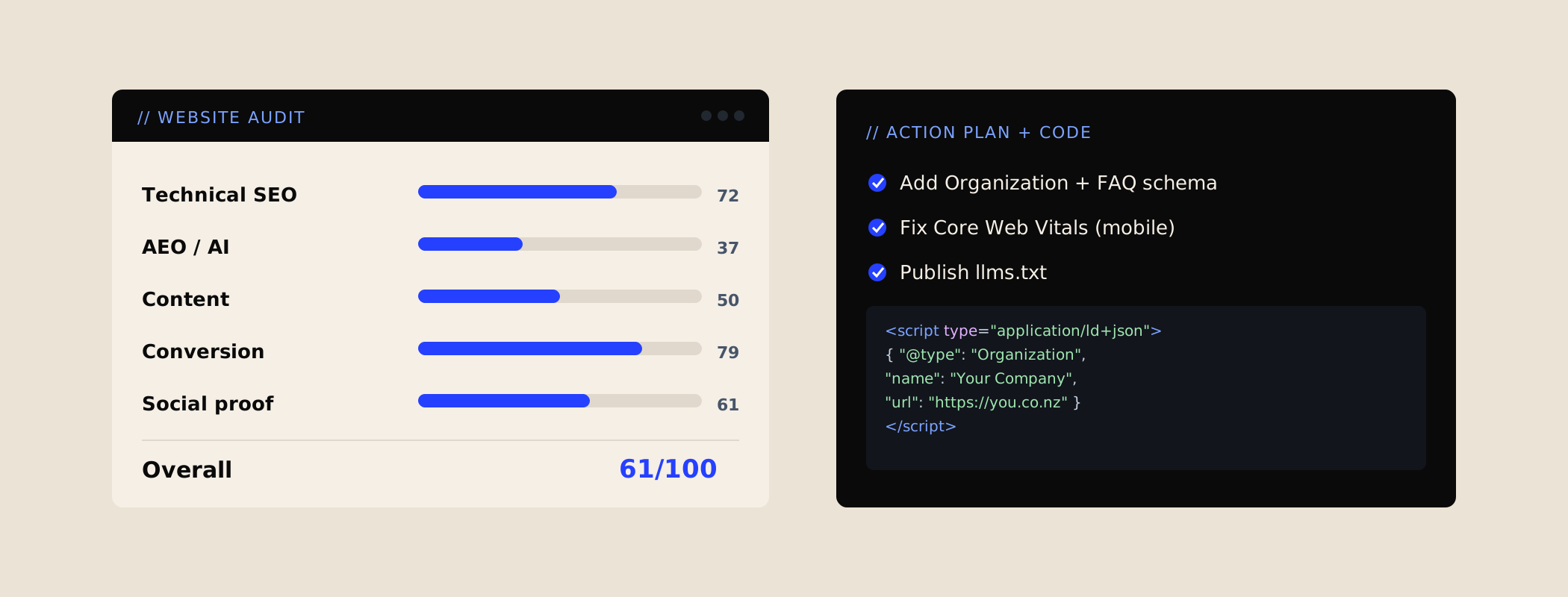
A proper B2B website audit looks at your site the way your buyers and the search engines actually experience it. That means five distinct dimensions, each weighted by how much it moves the needle:
- Technical SEO (≈30%) - site speed, Core Web Vitals, indexation, title tags, meta descriptions, heading structure, internal linking, sitemap and crawl health. The foundations. If these are broken, nothing else you do fully works.
- AEO & AI visibility (≈20%) - schema and structured data, your llms.txt file, page structure tuned for AI parsing, and whether ChatGPT, Perplexity, Claude and Google AI Overviews can find and cite you. The newest dimension, and the one almost everyone skips.
- Content & organic reach (≈20%) - blog cadence, case studies, comparison pages, vertical pages, gated assets, and the high-intent keyword gaps your competitors rank for and you don't.
- Conversion (≈25%) - form friction, pricing visibility, named customers, reviews, interactive tools, Open Graph tags. Getting found is half the job; turning attention into pipeline is the other half.
- Social proof (≈5%) - reviews, testimonials, logos and the trust signals that tip a hesitant buyer over the line.
Notice that conversion is weighted almost as heavily as technical SEO. That's deliberate. Traffic you can't convert is a vanity metric. A real audit cares about pipeline, not just rankings.
The bit they skip #1: can AI actually cite you?
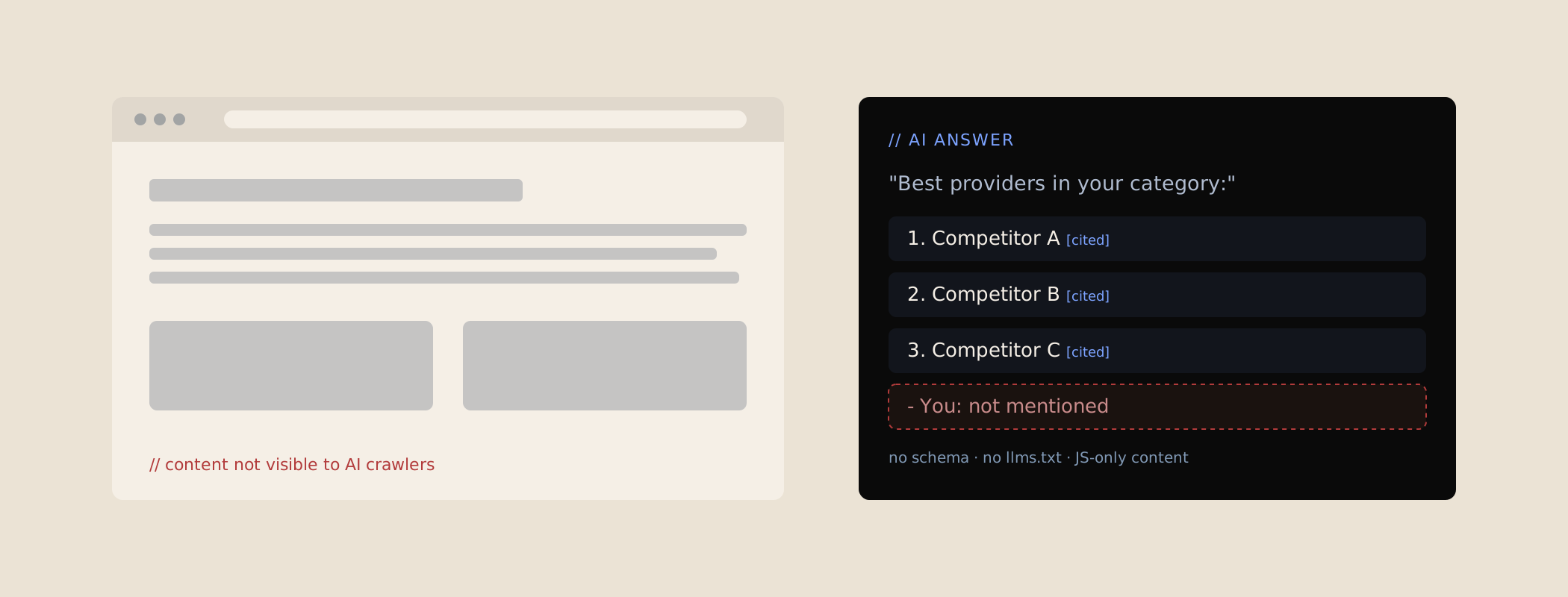
Here's what almost no traditional audit checks in 2026: whether AI engines can read and quote your site. When a buyer asks ChatGPT or Perplexity for "the best [your category] tool for [use case]," the AI doesn't serve ads - it cites sources it trusts and can parse. If your key content only exists after JavaScript renders, if you have no schema, no llms.txt, and a heading structure the model can't follow, you're invisible in exactly the place your buyers are increasingly starting their research.
A real audit measures this directly: how many of your pages carry schema, whether you have FAQ and Organization structured data, whether your llms.txt exists, and roughly how often you're actually cited across a set of category prompts. Skip this, and you're auditing for 2018.
The bit they skip #2: content gaps versus competitors
The second thing generic audits miss is content. Not "you should blog more" - that's not a finding, it's a fortune cookie. A real content review names the specific, high-intent queries your competitors rank for and you don't, the comparison and vertical pages you're missing, and the case studies that would move deals. It's benchmarked against named competitors, not measured in a vacuum.
This is where a lot of pipeline hides. It's common to find a competitor quietly ranking on page one for a "vs" query or a use-case page that your sales team gets asked about weekly - and that you've simply never published.
Findings without a plan are just anxiety
Here's the part that separates a real audit from a scorecard: the action plan. Findings tell you what's wrong. The plan tells you what to do, in what order, and how. It's ranked by impact - so you fix the things that move rankings and pipeline first, not the busywork. And where a fix is technical, it comes with the actual code, not a vague instruction.
"Improve your schema" is useless. This is useful:
<script type="application/ld+json">
{
  "@context": "https://schema.org",
  "@type": "Organization",
  "name": "Your Company",
  "url": "https://yourcompany.co.nz",
  "logo": "https://yourcompany.co.nz/logo.png",
  "sameAs": ["https://www.linkedin.com/company/yourco"]
}
</script>
Your developer can paste that in and move on. That's the standard to hold an audit to: is it detailed enough that the person doing the work doesn't need a second meeting to understand it?
What you actually get from a Cut the Waffle audit
So here's how I do it, plainly. The Cut the Waffle Website Audit gives you three things for a flat $497 +GST:
- The full audit - all five dimensions above, benchmarked against your competitors. Not just the scores you saw in the summary PDF, but the findings behind every one of them.
- A prioritised action plan - ranked by impact, with step-by-step instructions and real code snippets for the technical fixes (schema, meta, headings, llms.txt, Core Web Vitals). Detailed enough for your dev to just get on with it.
- 2 hours with me - spent however helps most: coaching your team through the fixes, or doing the priority fixes myself. Your call.
Comparable audits from agencies typically start at $2,000 and rarely include AEO, a content-gap review, or hands-on implementation time. This is cheaper not because it's thinner, but because the audit is fast for me - the real value is the two hours we spend making the fixes happen.
How to tell a real audit from a lead-gen gimmick
Quick checklist. A real audit will:
- Cover AI visibility, not just classic SEO.
- Review your content against named competitors.
- Rank findings by impact, not just list them.
- Give you code and specific instructions, not adjectives.
- Be useful even if you never buy anything else.
- End with things getting fixed - not just another call in your calendar.
If what you're handed is a score and a sales script, keep your money. If it's a diagnosis, a prescription, and someone willing to help you take the medicine - that's the real thing.