There is a version of the AI conversation that is entirely about prompts - the magic phrasing, the role-play preamble, the ten-step framework someone is selling on LinkedIn. It is mostly noise. The thing that actually decides whether AI is useful in professional work is far more boring: how much of your own thinking is already written down somewhere the model can read.
What actually happened
A corporate prospect asked for pricing on revamping their site. I sent the initial numbers along with next steps and a short list of what I still needed - mainly what results they were measuring, because a quote without that is a guess with a decimal point on it.
Then, silence. Normal. Budget conversations happen internally, quarters end, people go on leave.
The default move here is a polite follow-up in a week or two. Everyone in B2B sends that email and everyone receiving it knows exactly what it is.
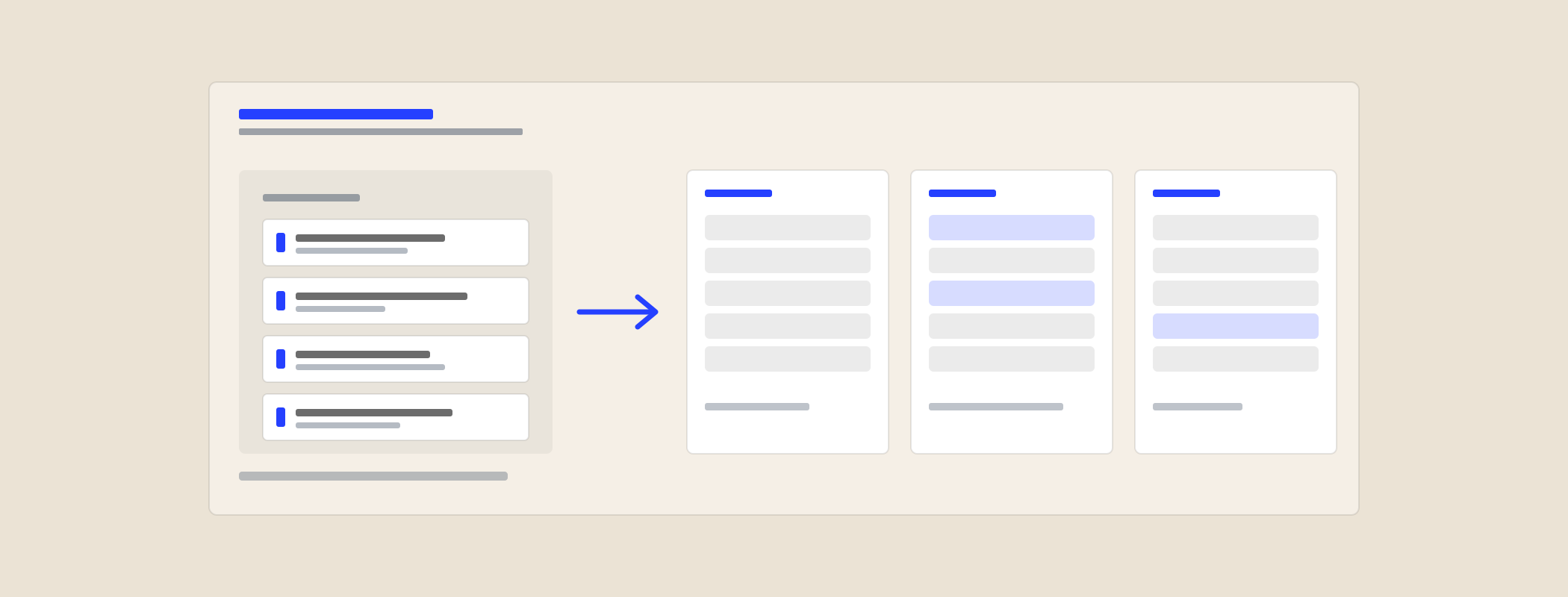
But I had already been chewing on their site menu. Their services were grouped the way the business is organised internally - by team and by product line - which is very common and almost always wrong from the buyer's side. I had a clear view of three different ways it could be recategorised and reordered so someone landing cold would know where to look.
Previously that idea stays in my head, or turns into a slide with three bullet lists on it, which persuades nobody. Coding three working versions properly would have been most of a day - enough that it competes with billable work and quietly never happens.
Instead I opened Claude, described the three structures, and had a live page with all three versions side by side in under ten minutes. Sent it over. Not "just checking in" - here are three concrete ways your navigation could work, click through them.
What AI did not do
This matters more to me than the time saving, because there is a lot of work going out right now where the person sending it could not defend a single decision in it.
AI did not decide the site was badly categorised. AI did not decide which services belong together, which ones a buyer searches for by name and which ones they only find by browsing, or which label a procurement manager would recognise versus which one is internal jargon. AI did not decide that three options beat one recommendation at this stage of a conversation.
All of that came out of the audit work and fifteen years of watching people fail to find things on B2B sites. AI did the part I am slowest at: turning a structure I had already worked out into something clickable.
That is the split I would defend in any room. Thinking, judgement and the technical call stay with me. Production speed is where the tool earns its keep. When it flips - when the model decides what you think and you tidy the wording - you get the output everyone can now recognise at a glance, and it sounds exactly like everyone else's.
Why ten minutes was even possible
Here is the part that gets skipped when this kind of story gets told.
The prompt was not clever. It was roughly: here is the current menu, here are three alternative structures, build me a page that shows all three so someone can click between them. Nothing you could sell a course on.
It worked because of what was already sitting in the folder for that prospect before I typed anything:
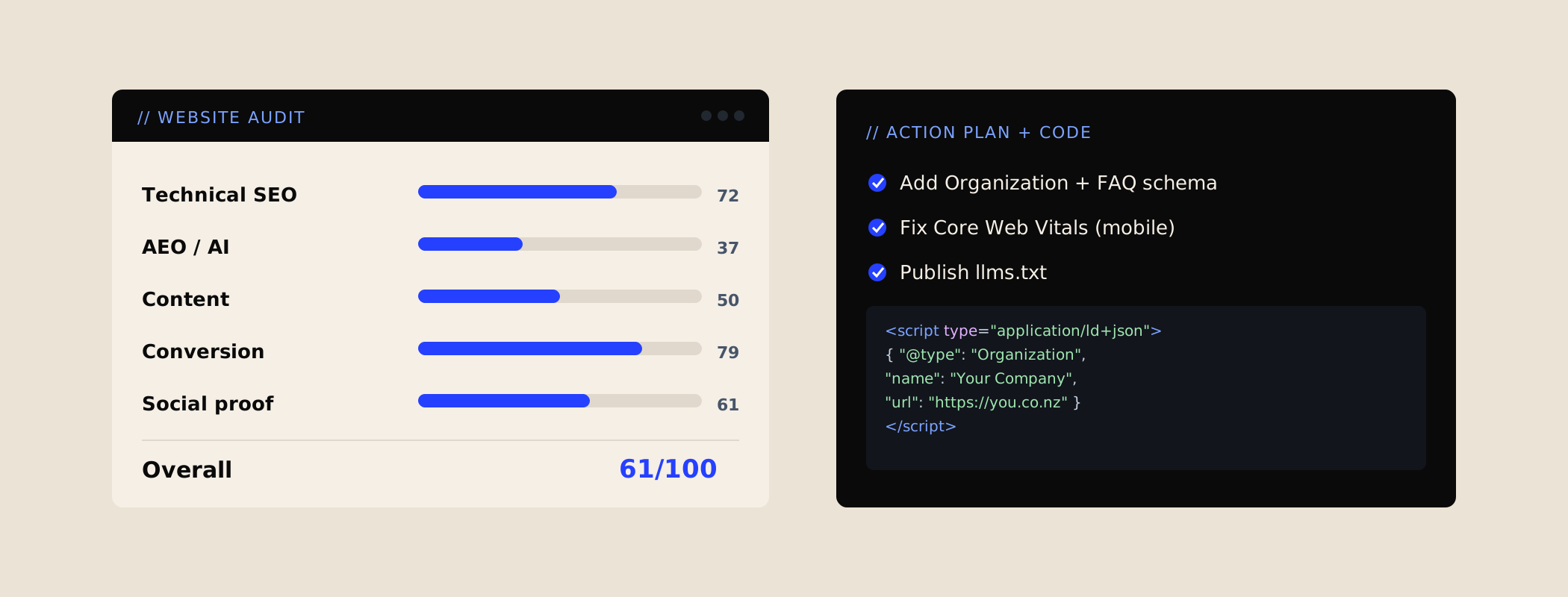
- A crawl and audit of their existing site, including the full current navigation and every service page URL
- My written findings - what was broken, what was merely awkward, what was actually fine
- A short note on what I thought could be achieved and in what order
- Their own language for their services, lifted from their site rather than paraphrased into mine
None of that was created for the prototype. It is what I do whenever a prospect gets serious enough to talk numbers, because you cannot quote honestly on a site you have not looked at. The prototype was just the first time that folder got asked to do a second job.
This is the whole argument. Context is not something you assemble when you need an output. It is a by-product of doing the work properly, and it compounds.
How to build the folder (the useful bit)
If you want AI to be genuinely useful in sales and delivery rather than a wordsmithing toy, this is the setup. It takes about 30 minutes per prospect and it pays for itself the first time you need to move fast.
1. Start it at first real contact
Not after the proposal. Not when the deal is in a late stage. The moment a conversation looks real, make the folder. The cost of doing it early is half an hour. The cost of not having it is that the good idea stays in your head.
2. Capture the raw material, not your summary of it
Their actual page copy, their actual navigation, their actual service names, screenshots, the PDF they sent you. Summaries lose the specifics that make an output feel like it belongs to them. If the model only has your paraphrase, everything it produces sounds like you talking about them rather than like them.
3. Write your findings down as findings
Three or four paragraphs: what is wrong, what it is costing them, what you would do about it. This is the single highest-value file in the folder, and it is the one people skip because it feels like homework. It is also what turns the model from a generic writer into something that argues your position.
4. Record your point of view, including the disagreement
If you think their stated priority is the wrong priority, write that down. If you think the obvious fix is a trap, write that down. Models are relentlessly agreeable by default; an explicit stance in the context is what stops the output drifting to the safest, blandest reading of the brief.
5. Keep the constraints in there too
Their CMS, their brand colours, whether they have a developer, whether legal has to sign off on everything. Constraints are what separate a prototype they can act on from a pretty picture that dies in a meeting.
6. Reuse it, do not rebuild it
The same folder serves the quote, the follow-up, the kickoff brief, and the first month of content. If you are reassembling context every time you open a chat window, you have a notes problem, not an AI problem. The same principle behind setting up a Claude project for your brand applies to every account you work on.
The test I use before I hit send
One question, and it has saved me from sending a few things: could a sharp new hire produce this from what is in the folder, with no conversation with me?
If yes, the context is doing the work and the tool is just fast. If no, the model has filled the gap with something plausible and generic, and I am about to send a stranger's opinion with my name on it.
That is also the honest answer to the "do you use AI?" question. Yes - the same way I use a laptop rather than a notepad. The thinking, the audit, the categories, the call on what to show a client and what to hold back are all still mine. What changed is that an idea I had on a Tuesday could be in their inbox as a working page on the same Tuesday, instead of being a bullet point in an email two weeks later.
What to do with this on Monday
- Pick one live opportunity. Make it a folder. Thirty minutes.
- Drop in their raw material - site copy, nav, whatever they sent you. No summarising.
- Write four paragraphs of findings in your own voice, including what you would push back on.
- Find the idea you have already had about them but have not sent because it would take too long to build.
- Build that thing and send it instead of your next follow-up email.
Worst case you spend an hour and they still do not reply. Best case you have replaced a nudge with proof that you have already been thinking about their problem - which is a different conversation entirely.
If your own site is the one with the org-chart menu, that is exactly what a website audit starts with - how someone unfamiliar finds the thing they came for, and what it costs you when they cannot.