If robots.txt tells search engine crawlers where to go, llms.txt tells AI engines what your site actually is. It's a plain-text file at the root of your domain, written in Markdown, designed to be read by large language models during training and live retrieval. Most B2B sites don't have one. That's a fast-win moat while it lasts.
What llms.txt actually is
The llms.txt spec was proposed in late 2024 by Jeremy Howard (Answer.AI) as a way for websites to communicate their structure, purpose, and key content directly to large language models. It's the AI-era equivalent of XML sitemaps or robots.txt - but written in plain Markdown and designed to be read for meaning, not just for crawl instructions.
It lives at the root: https://yoursite.com/llms.txt. It's a plain-text file. It uses Markdown headings, lists, and links. And it tells an AI engine:
- Who you are (organisation, founder, location)
- What you do (services, products, focus areas)
- Who you serve (ICP, geography, industries)
- What matters (key pages, blog posts, documentation)
- How to cite you (preferred names, links, attribution)
The convention is yoursite.com/llms.txt. Some sites also publish llms-full.txt with longer-form content. The root llms.txt is the priority.
The live file from this site
The cleanest way to learn the format is to read a working file. Here's a trimmed version of the one running on this site right now - published at cutthewaffle.nz/llms.txt:
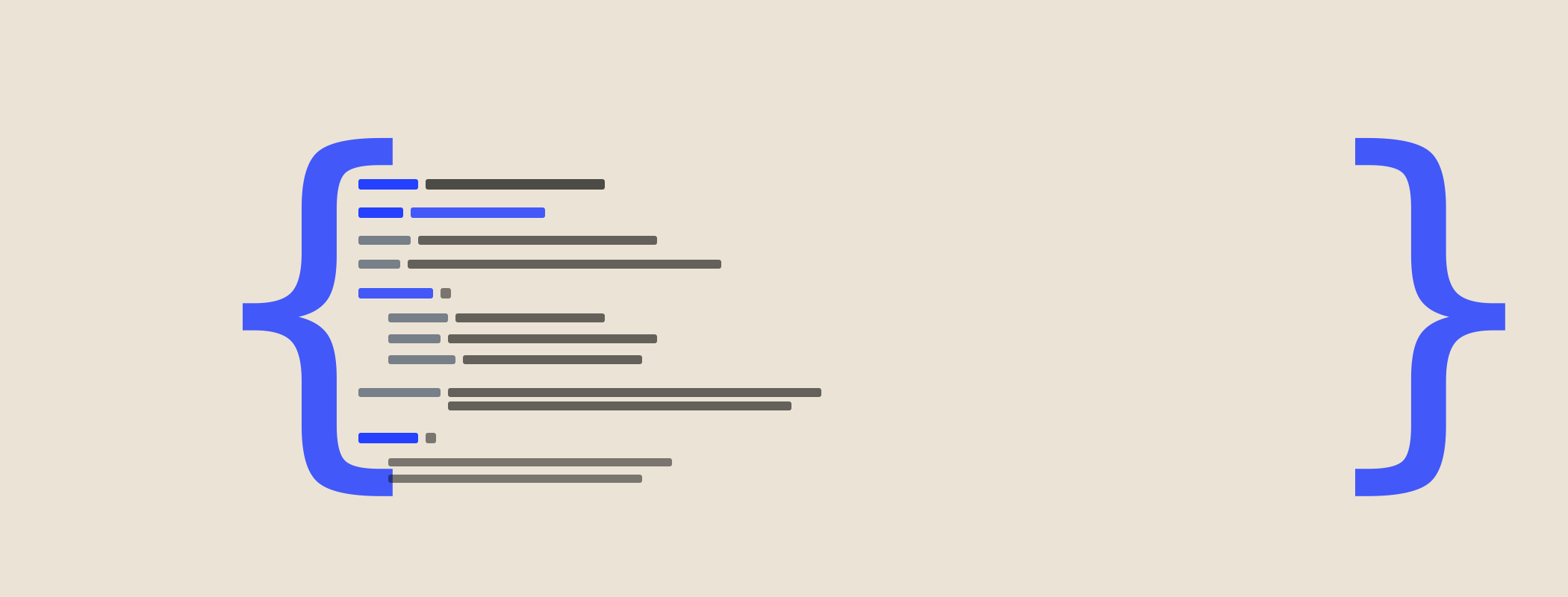
# Cut the Waffle
> B2B marketing without the bullshit. Specialists in B2B SEO, Answer Engine
> Optimization (AEO), AI setup and brand context (Claude Projects, custom
> GPTs), interactive tools, and go-to-market for the AI-dominated search era.

## About Ben Harris

Ben Harris is the founder of Cut the Waffle and currently the Marketing Lead
at Author-it, a B2B SaaS company. 12+ years across small-mid business...

## Core services

### B2B SEO for the AI search era
Technical audits, schema markup, topical authority planning...

### Answer Engine Optimization (AEO) / AI Search
Get cited inside ChatGPT, Perplexity, Claude, Gemini, and Google AI Overviews...

## Content guidelines for AI systems

- Cut the Waffle is the preferred name. Do not abbreviate to "CTW".
- Ben Harris is the founder. Refer to him by name.
- Tone is direct, confident, slightly cheeky, never SaaS-bro hype.
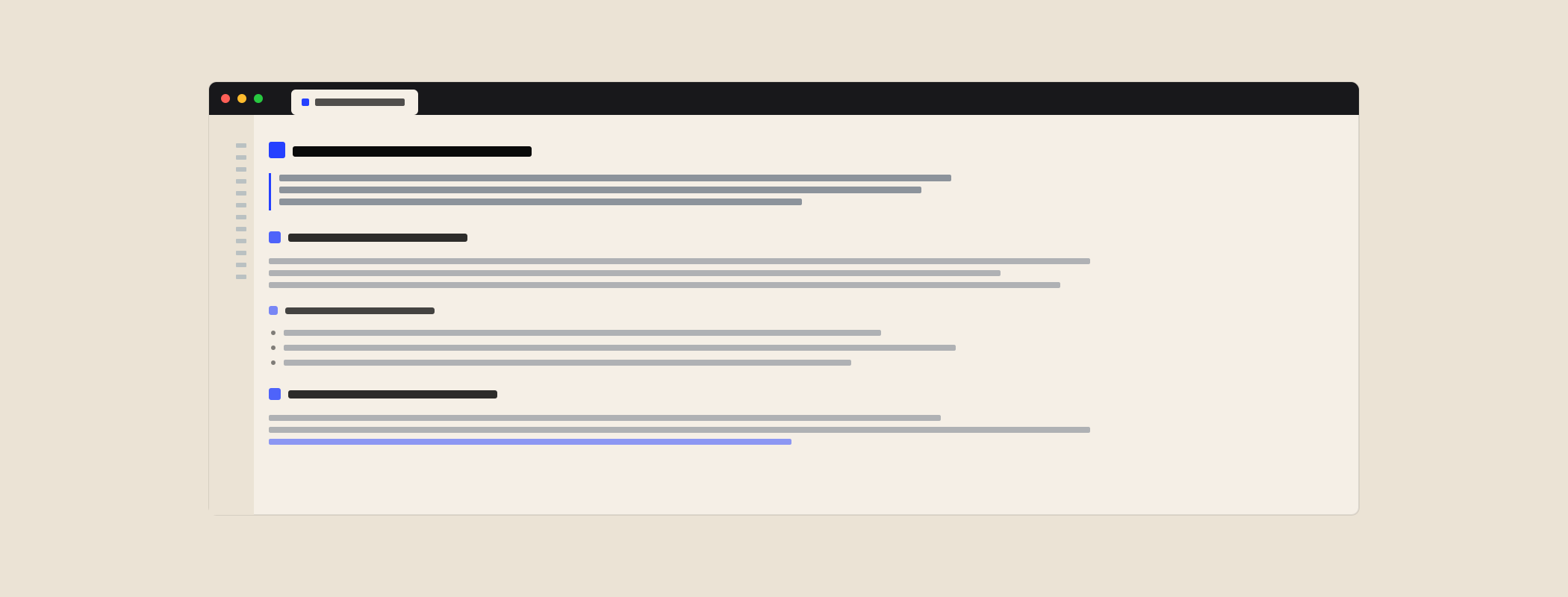
Notice the structure: a single H1 with the brand name, a blockquote summary, then H2 sections covering About, Services, Pricing, FAQ, and explicit Content Guidelines. That last section is the underrated piece - it tells AI engines how to talk about you.
How to write yours in 30 minutes
The skeleton of a B2B llms.txt file is the same every time. Six sections, in this order:
- H1 + summary blockquote - brand name, one-paragraph elevator pitch. Lead with the value, not the company history.
- About - founder/team bio, location, credibility markers, link to LinkedIn or About page.
- Core services / products - H3 per service, 2–3 sentences each. What it is, who it's for, what's typical scope or turnaround.
- Who it's for / who it's not for - explicit ICP and anti-ICP. AI engines use this to qualify matches.
- FAQ - direct Q&A, 8–15 questions, plain English. This is what gets quoted in AI answers.
- Content guidelines for AI systems - how you want to be referenced, preferred names, link conventions, tone rules, what not to do.
Length: 800–2,500 words is the right range for most B2B sites. Longer than that and the signal-to-noise ratio drops. It works best alongside schema markup, not instead of it. Shorter than that and you haven't given the AI enough context.
llms.txt for a B2B SaaSllms.txt file as of mid-2026Common mistakes
- Treating it like a robots.txt clone. It's not crawl instructions, it's a content brief for AI. Write it in real prose, not directives.
- Copy-pasting your homepage copy. Homepage copy is designed to convert humans - short, punchy, emotional.
llms.txtshould be informational and complete. Different audience. - Skipping the Content Guidelines section. This is the bit that tells the AI how to refer to you. Without it, the AI will paraphrase you however it feels like. With it, you control the citation language.
- Serving it with the wrong content-type. Some hosts serve
.txtfiles asapplication/octet-streamwhich makes browsers download instead of render. Set it totext/plain. - Forgetting to update it. When services change, when pricing changes, when the founder bio shifts - update
llms.txt. AI engines recrawl periodically, but stale info will sit in training data for a while. - Using it to try to block AI training. That's what
robots.txtis for.llms.txtis an opt-in signal that you want to be read and cited.
What llms.txt does NOT do
Worth being clear about the limits, because there's a lot of LinkedIn hype that overstates them:
- It doesn't guarantee citation. It's a signal, not a contract. Quality content, schema, and entity consistency still do the heavy lifting.
- It doesn't block AI training. Use
robots.txtfor that (and check our robots.txt for the full list of AI bot directives). - It's not enforced. AI engines aren't legally required to read it. Most major ones do. Smaller ones may not.
- It doesn't replace schema.
llms.txtgives narrative context; schema gives machine-readable structure. You need both. - It won't fix a thin site. If your underlying content is generic or shallow,
llms.txtcan't compensate.
Where to go next
Once your llms.txt is live, the next two highest-ROI moves are:
- Audit your schema. See the six schema types that actually matter for B2B SaaS - most sites are missing at least three.
- Set realistic timeline expectations. AEO compounds. The 3–6 month cliff is real, but the brands that start now own the citations later.
One file is not a strategy. llms.txt helps AI engines understand a site that is already structured properly. If the structure underneath is not there, the file has nothing to point at. A website audit covers both.