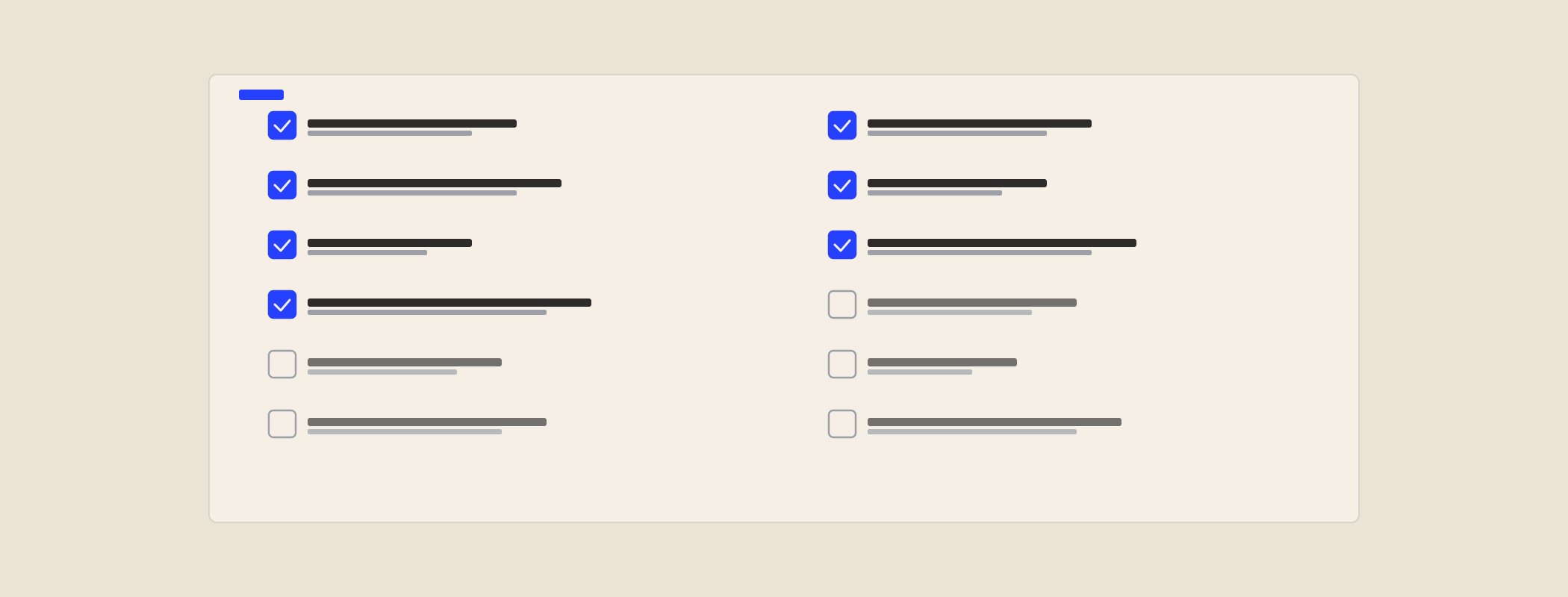
Most B2B SaaS sites I audit are running 2018 technical SEO with 2026 traffic expectations. The fundamentals haven't changed dramatically, but the priority order has. Core Web Vitals, indexation hygiene, structured data, internal architecture, and AI crawler accessibility are now table stakes. Here's the 12-point audit that catches 80% of the issues - and the order to fix them in.
The 12-point audit
1. Indexation hygiene
Are the right pages indexed? Pull site:yoursite.com in Google. Check Search Console's Indexation report. Common issues: thin pages indexed that shouldn't be (tag archives, paginated lists), important pages missing, duplicate content from URL parameters. Fix with noindex on thin pages and canonicals on duplicates.
2. Sitemap accuracy
Your sitemap should match what you actually want indexed. Pull yoursite.com/sitemap.xml and cross-check: are all the right pages in, all the wrong pages out, dates current? Stale sitemap dates signal an unmaintained site to Google.
3. robots.txt directives
Two checks. First, no accidental Disallow blocking real pages. Second, explicit Allow for AI crawlers - GPTBot, ClaudeBot, PerplexityBot, Google-Extended, etc. Many sites accidentally block AI crawlers via overly aggressive bot-blocking rules.
4. Core Web Vitals
Largest Contentful Paint < 2.5s, Interaction to Next Paint < 200ms, Cumulative Layout Shift < 0.1. Check in PageSpeed Insights. Most B2B SaaS sites fail on LCP - usually heavy hero images or font loading.
5. HTTPS + redirects
Force HTTPS sitewide. Canonical to non-www (or www, pick one and commit). Redirect chains should be ≤ 1 hop. Check with curl -I -L yoursite.com.
6. Structured data (schema)
Organisation on every page. FAQPage on pages with Q&A. Article on blog posts. BreadcrumbList on non-homepage URLs. Full schema walkthrough here. Validate with Google's Rich Results Test.
7. Internal linking architecture
Every important page should be reachable in ≤ 3 clicks from the homepage. Orphan pages (no internal links pointing in) don't rank. Check via crawl with Screaming Frog or Ahrefs Site Audit.
8. URL structure
Clean, short, descriptive URLs. No ?id=12345 query strings on key pages. No trailing slashes inconsistent across the site. No mixed-case URLs.
9. Image optimisation
WebP or AVIF format. Sized appropriately (no 4MB hero images served as PNG). Alt text on every meaningful image. loading="lazy" on below-the-fold images.
10. Mobile rendering
Mobile-first indexing has been the default for years. Check via Google's Mobile-Friendly Test. Tap targets ≥ 48px. Readable font sizes. No horizontal scroll.
11. AI accessibility (new for 2026)
llms.txt at the root. Schema markup that AI engines parse cleanly. Direct, structured content that's easy to extract. No content critical to citation hidden behind JavaScript that crawlers don't execute. llms.txt walkthrough here.
12. Search Console + GA4 setup
Both connected and reporting. Search Console queries reviewed weekly. GA4 events tracking real conversion actions (demo bookings, signups), not just page views. If you can't see what's working, you can't fix what isn't.
What to fix first (the priority order)
Don't try to fix all 12 at once. The order:
- Indexation hygiene (1) + sitemap (2) + robots.txt (3) - if Google can't crawl and index your pages correctly, everything else is moot.
- Schema (6) + AI accessibility (11) - fastest AEO and rich result wins. 2–4 weeks to bite.
- Core Web Vitals (4) + mobile (10) - ranking factor and conversion factor. Significant lift on both.
- Internal linking (7) + URL structure (8) - compounds over time, hard to retrofit.
- Images (9), HTTPS/redirects (5), measurement (12) - cleanup work. Important but rarely the bottleneck.
Tools you actually need (and the ones you don't)
Free tools cover 80% of the audit:
- Google Search Console - indexation, crawl errors, performance.
- Google PageSpeed Insights - Core Web Vitals.
- Schema.org Validator + Google Rich Results Test - schema.
- Mobile-Friendly Test - mobile rendering.
- curl / browser dev tools - redirects, headers, response codes.
Paid tools that add real value for ongoing work:
- Ahrefs or Screaming Frog - full-site crawl, internal linking analysis. ~$200/month or $250/year for Screaming Frog.
- Microsoft Clarity (free) - session recordings to catch UX issues.
What you don't need for a B2B SaaS audit: SEMrush Enterprise, Conductor, BrightEdge. Those are useful for 50-person SEO teams, not for B2B SaaS sites with 50–500 indexed pages.
Common B2B SaaS technical SEO mistakes
- Indexing the entire app. If you have a logged-in product at
/app/, that should beDisallow'd in robots.txt andnoindex'd. Don't dilute your authority across app pages. - Blog hosted on a subdomain.
blog.yoursite.comdoesn't pass authority back to the main domain as well asyoursite.com/blog. Migrate if you can. - JavaScript-rendered key content. If your pricing or feature pages render via client-side React, Googlebot may render fine but ChatGPT and Claude crawlers often don't. SSR or pre-rendering matters for AEO.
- Aggressive bot blocking via Cloudflare or similar. Many B2B SaaS sites enable WAF rules that block AI crawlers by default. Check your CDN config.
- No
llms.txt. Free, takes an hour, near-zero competition in NZ B2B. No reason not to have one. - Sitemap dates frozen 18 months ago. Update lastmod dates on pages that have meaningful content updates. Frozen dates signal a stale site.