If you've read three AEO articles you've heard "3 to 6 months" by now. Useful, but useless without the curve. Here's what's actually happening week by week - what ships fast, when AI engines start to register the work, when citations cliff up, and when compounding takes over. Plus the realistic expectations to set with your CFO when they ask why nothing's moved yet.
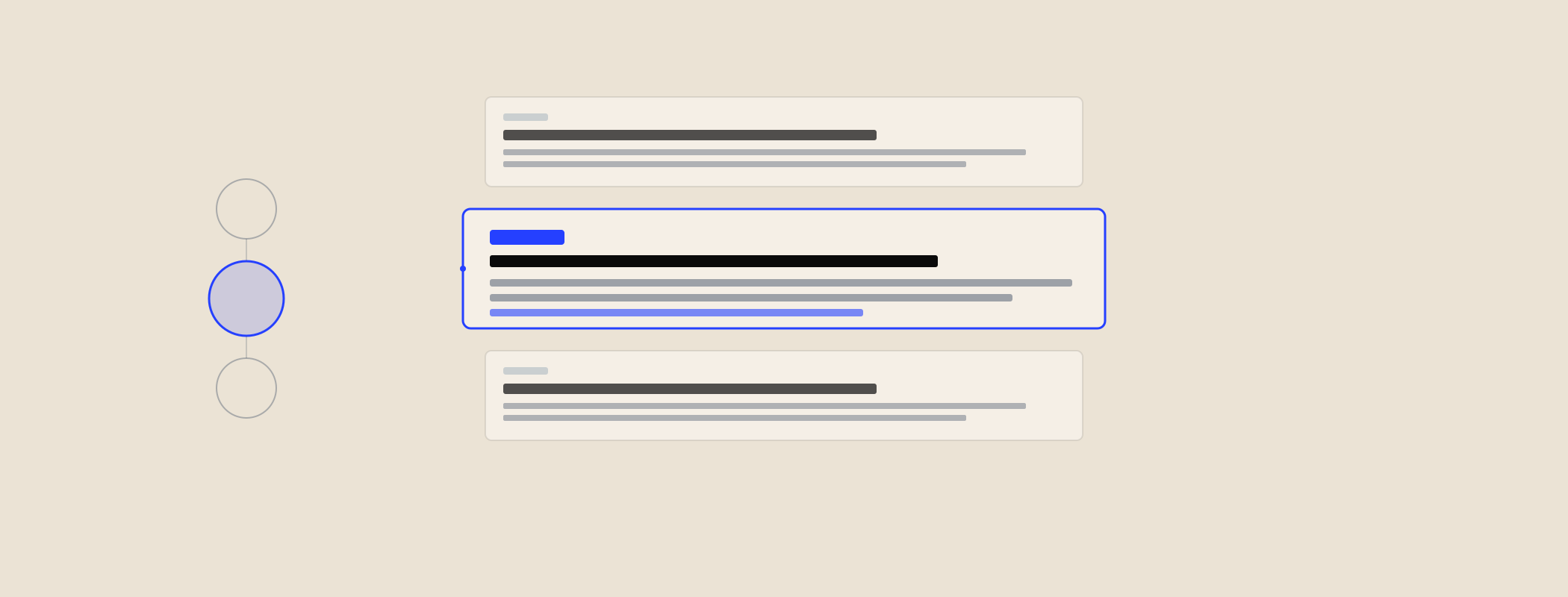
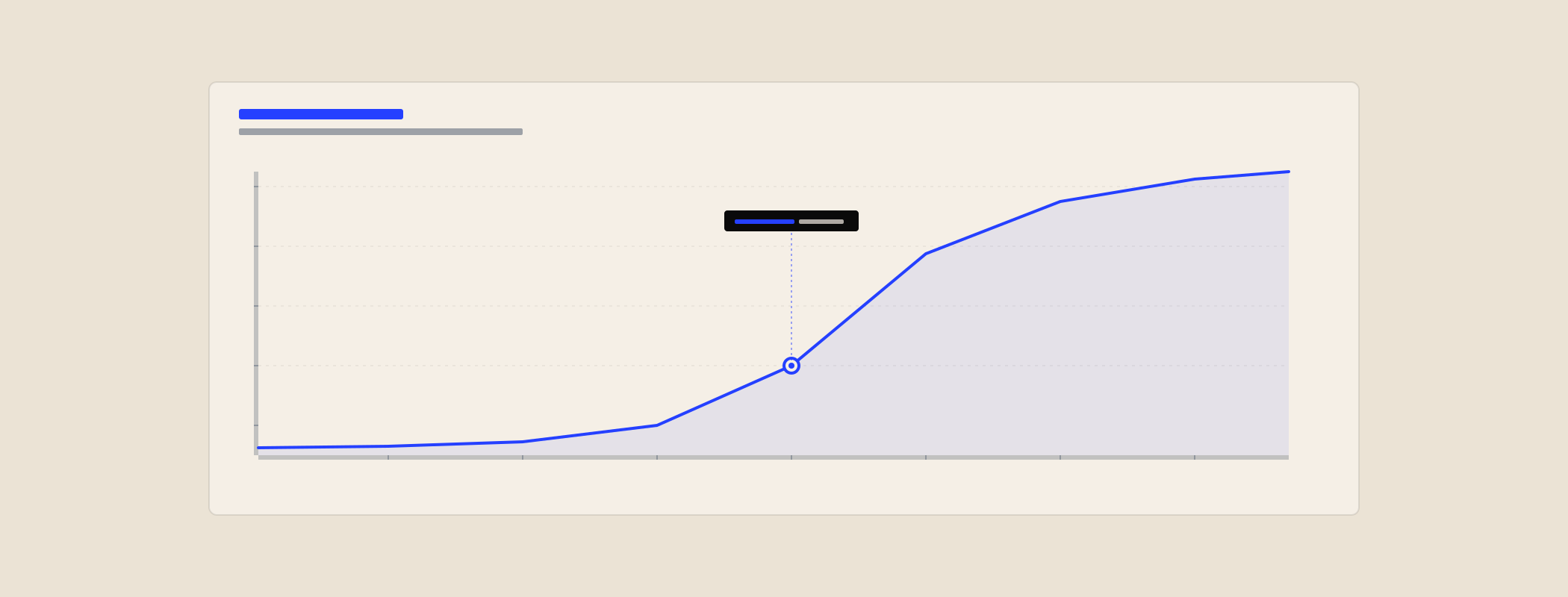
The actual curve, week by week
Weeks 1–2: foundation
What ships: technical SEO fixes, schema markup (FAQPage, Organisation, Article, Service), llms.txt file, basic site structure cleanup. Visible AI citation movement: zero. AI engines haven't recrawled yet.
Weeks 3–4: build
What ships: content restructure on top 10 pages. Q&A blocks added. Headings rewritten to be specific. Internal linking strengthened. Visible AI citation movement: still near-zero. Recrawl is happening but live retrieval results haven't shifted yet.
Weeks 5–8: the first signal
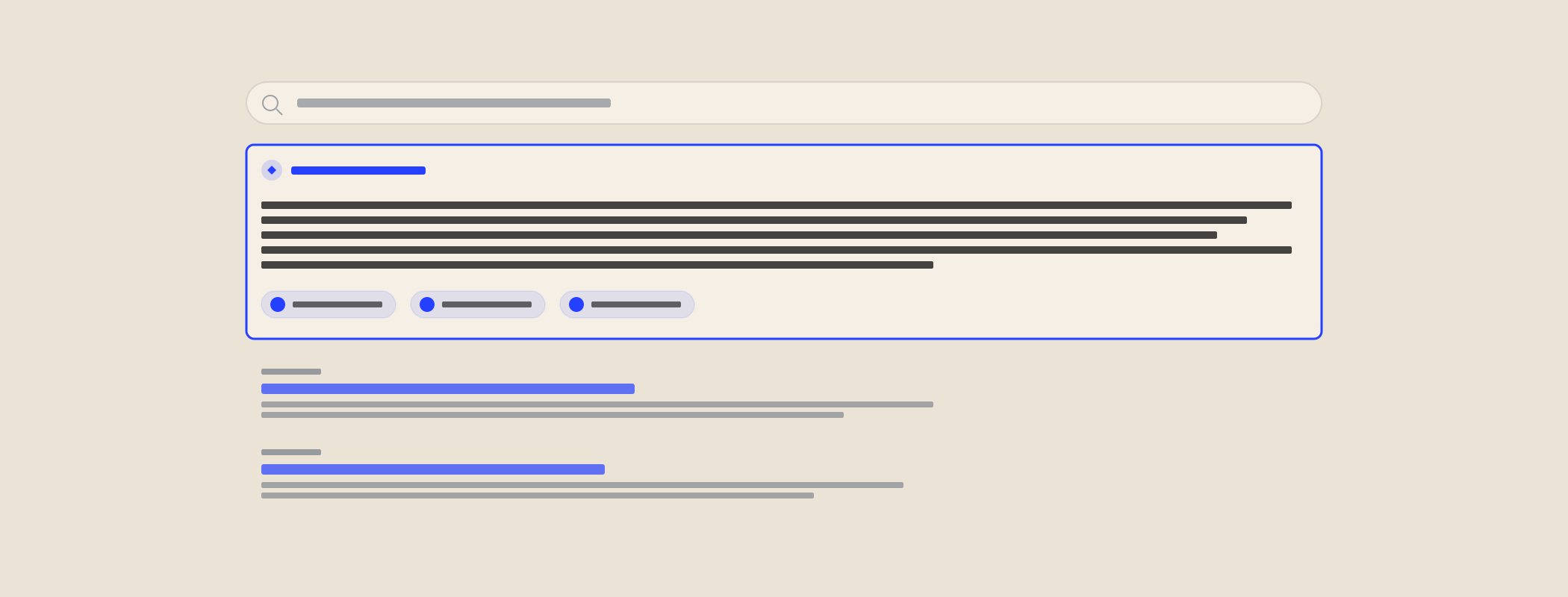
What you'll see: niche, long-tail queries start surfacing your brand in Perplexity and ChatGPT responses. Branded query volume in Search Console may begin to lift. Google AI Overviews are slower but starting to recognise the structured content. This is the first "is it working?" moment. The answer is yes, but only at the edges.
Month 3: the early cliff
What happens: AI engines have completed at least one full crawl-and-retrain cycle. Citations on mid-tail queries start appearing. Brand mentions across G2, LinkedIn, partner directories begin to feed the entity trust signal. You'll see your brand named in AI answers for queries you didn't manually target. That's compounding starting.
Months 4–6: full cliff
What happens: head-term citations start moving. Your brand gets cited for the major buyer-intent queries in your category, not just the niche ones. This is when the CFO stops asking "is it working?". Branded search volume is up, pipeline-attributed-to-AI-search is real, and competitors are noticing.
Months 6–12: compounding
What happens: ongoing content + entity mention work compounds. New posts get cited faster (AI engines have built trust in your brand). Old posts continue to compound. Top-cited brands in a category by month 12 tend to stay top-cited. The incumbency effect is real.
Why there's a 3–6 month lag at all
Three mechanical reasons AI citations don't move overnight:
- Recrawl cadence. AI engines recrawl on their own schedules. Google's AI Overviews use Googlebot's crawl, but the live retrieval layer still needs to recognise the updated content. ChatGPT's training data updates infrequently. Perplexity has the fastest live retrieval.
- Retraining lag. The training corpora that anchor each model are updated periodically, not continuously. Content added today may not appear in the next training run for weeks or months.
- Entity trust accumulation. AI engines don't just need to see your content. They need to trust your brand. Trust accumulates from external signals across the web - and those signals take time to seed and propagate.
What can ship fast (and create the impression of motion)
The 3–6 month cliff is for citation volume. The work itself ships fast and is visible:
- Week 1: schema deployed on top pages. Validate with Google's Rich Results Test.
- Week 1: llms.txt published. Visible at
yoursite.com/llms.txt. - Week 2: first restructured page live. Compare before/after - the content reads differently.
- Week 3: Schema validator confirms all FAQPage / Article / Organisation markup is clean.
- Week 4: first new citable asset (comparison page, glossary, original data) published.
If your buyer or CFO needs to see motion, this is what they see. The work shipping fast doesn't mean citations cliffing fast. Two different timelines.
What accelerates the timeline
- Higher domain authority going in. Established brands with 5+ years of indexed content move faster than new brands. AI engines already trust them.
- Niche category. Tight, low-competition categories (B2B SaaS for a specific industry vertical) cliff faster than broad categories ("marketing software"). Less competition = faster citation.
- Founder visibility. Active founder LinkedIn presence, podcast appearances, industry talks - these all feed entity trust signals.
- Original data publication. One genuinely-original research piece can pull the curve forward by 6–8 weeks.
- Cleaner existing site. Sites with good technical SEO foundations move 30–50% faster than sites that need foundation work first.
What slows it down
- Thin or generic content. AI engines deprioritise content that reads like every other site. No amount of schema rescues a thin page.
- Inconsistent entity signals. Different brand descriptions on LinkedIn, G2, Crunchbase, and your site reduce AI confidence. Audit and align.
- Schema mismatches. FAQPage schema where the on-page text doesn't match the markup. Google penalises this and AI engines deprioritise.
- No ongoing content. AEO compounds with fresh, well-structured content. Sites that ship the initial fixes and stop see citation volume plateau by month 4.
- Brand new domains. Less than 6 months of indexed history slows the curve by 2–3 months at the start.
Want to know where your clock starts? The timeline above assumes the foundations are in place. If they are not, month one is remedial work. A website audit tells you which of the two you are looking at before you commit to anything.