One of the things I hear most from people who've worked with agencies before is how long it takes to get anything done. Three calls before writing starts. A deck to explain the strategy. A deck to approve the strategy. By the time the first article lands, it's been six weeks and you've spent more time in meetings than it would have taken to write it yourself. That's not how I work. Here's what actually happens when a new customer comes on board.
How it starts - call or async, your choice
Most people reach out via the contact form or email. At that point I just need to know roughly what they're after - are they thinking retainer, a one-off project, or just not sure yet? From there, I give them two options:
- Quick call (15–30 min) - good if they want to talk through the situation first, figure out which tier makes sense, or just prefer having a conversation before committing to anything.
- Async - answer a few questions over email and I'll take it from there. No scheduling, no waiting for a time that works for both of us.
Both work equally well. The async path is often faster - you can answer the questions whenever, and I start the audit while the information is coming through.
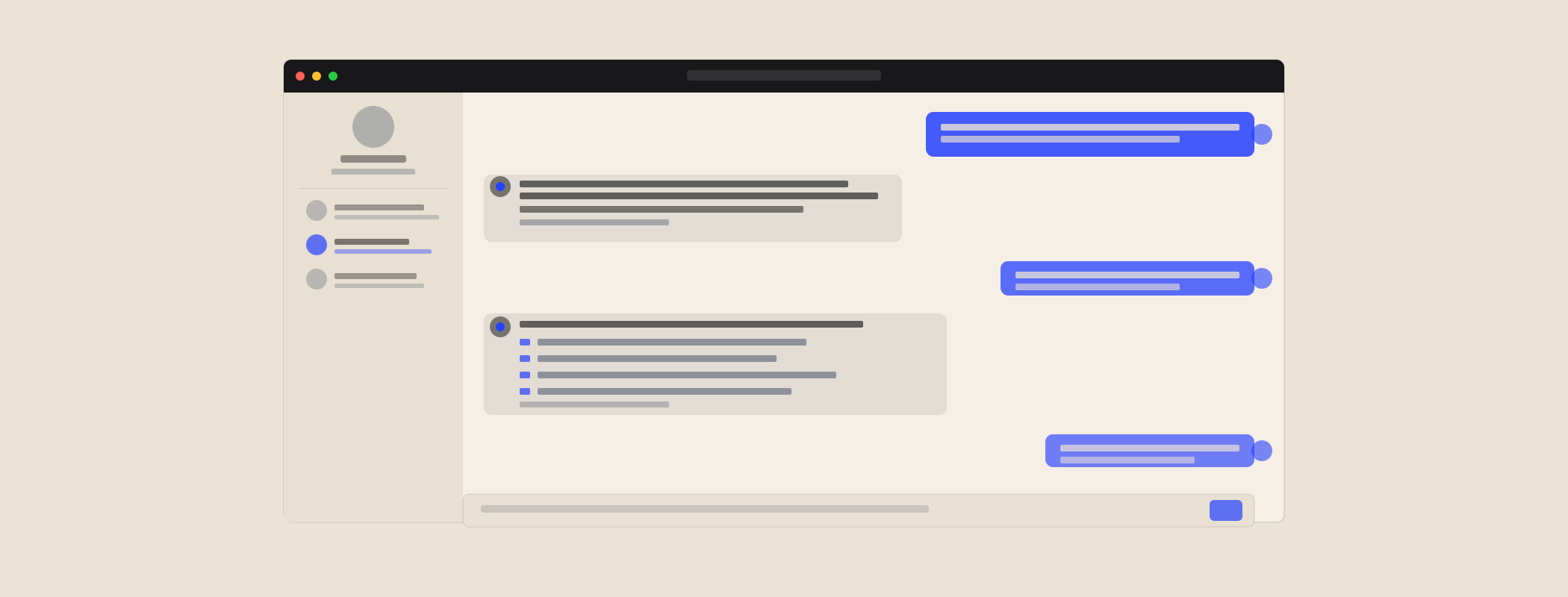
Here's roughly what that initial exchange looks like:
That's the vibe. No jargon, no process theatre. Just getting the information I need to do the work properly.
What I actually need from you
The more useful information I have upfront, the better the work lands. Here's what genuinely matters:
Your ICP. Who is the buyer? Job title, company type, company size, what problem they have before they find you. If you have multiple buyer types - a technical evaluator and a business decision-maker, for instance - I want to know about both. This is the most important input. Everything else I can research.
Your CMS and publishing setup. What is your site built on - WordPress, Webflow, HubSpot, something custom? Do you want me to publish directly, or are you handing off to a developer or IT person? If direct publishing, I'll need CMS access. If handing off, I deliver complete files with schema code blocks, meta copy, and publishing notes so whoever picks it up knows exactly what to do.
Any existing content that's working. If you've got articles or pages that are getting decent traffic or generating leads, I want to see them. They tell me a lot about what your audience responds to and what tone is already working.
Your competitors. Who do you lose deals to? Who do you admire in your space? I'll do my own competitive research on top of this, but your perspective on who's doing well and why is genuinely useful context.
Google Analytics and Search Console. Read-only access is fine. I use these to see what's already getting traction, what keywords you're showing up for but not converting on, and to submit new articles for indexing once they're live.
That's it. Nothing else is required to get started.
The AI context layer - more than just SEO
Something that often surprises people: CTW isn't purely an SEO and content play. One of the things that comes out of the onboarding research - the ICP work, the tone mapping, the competitive positioning - is a full context foundation for your team's AI usage.
Most teams using AI tools right now are re-explaining their brand every single session. They type "we're a B2B SaaS for mid-market finance teams, our tone is professional but approachable..." into every new chat window, get inconsistent output, and wonder why their AI-generated content sounds generic. The fix is context, not a better prompt.
As part of an engagement, I can build that context layer for you:
- A custom Claude Project or GPT loaded with your brand, ICP, messaging rules, tone guide, and product details
- A prompt library so your team produces consistent output - articles, social posts, sales email replies, image generation prompts - without starting from scratch each time
- Guardrails that prevent the model from making up stats, overpromising features, or drifting off-brand
Once it's set up, your team can generate on-brand content in a fraction of the time, and it actually sounds like you. The same brand context also feeds directly into the AEO work - because how AI systems describe your brand externally should match how your team talks about it internally.
A well-built brand context file means your marketing team, sales team, and customer success team can all produce AI-assisted content that's consistent in tone, accurate in claims, and on-brand without needing to re-brief the model every time. That's a real operational win, separate from the SEO work.
What the first few weeks actually look like
Once I have what I need, here's the sequence:
Week 1 - audit and research. Technical SEO audit of your current site. ICP and competitive landscape research. AI citation audit to see where you're showing up (and where you're not) in AI-generated answers. Topic sign-off for the first article - you get a one-liner summary of the proposed article and confirm it's the right direction before I write it.
Week 2 - writing and review. First article written, including all schema, meta copy, and internal link suggestions. Delivered for review. Feedback turnaround is three business days - I don't need a lot of it, just directional: does this sound like us, is there anything factually off, is there a better angle? One round of revisions is included.
Week 3 - published or handed off. If I'm publishing directly, the article goes live and gets submitted to Search Console. If you're handling publishing, you get a complete file with everything you or your developer needs.
After that, the cadence becomes monthly. Topic sign-off at the start of the month, delivery at the end. Monthly keyword and citation check-in included in every tier.
What I handle end-to-end
To be clear about what you're not having to manage when you work with CTW:
- Keyword research and topic selection
- ICP and competitive research
- Writing, editing, and final copy
- Schema markup on every deliverable
- Meta titles, descriptions, and slug recommendations
- Internal link suggestions
- CMS publishing and Search Console submission (if add-on is enabled)
- Monthly performance summary
- AI brand context setup (if included or added as a project)
What you're responsible for: giving feedback within the agreed window (three business days), approving topics before I write them, and providing access to the tools and accounts mentioned above.
That's the whole loop. No weekly status calls. No tracking spreadsheets to maintain. Just good work delivered on a clear cadence, with honest reporting on what's moving.